The End of the End of Everything – Dale Bailey

The End of the End of EverythingThe End of the End of Everything by Dale Bailey

My rating: 4 of 5 stars

I read Dale Bailey because his prose makes me want to write and when his stories speak to me, they sing.

I only connected with some of the stories in this collection – “The Bluehole,” “A Rumor of Angels,” and “Eating at the End-of-the-World Cafe” – and I’m not wholly certain what differentiates them from the other stories. It might be as simple as my connection to the characters. Once I look past Bailey’s prose, his characters all possess a realness I find compelling. It keeps me reading even when I don’t like them or I’m tired of their type: i.e., Ben Devine in the title story, yet another middle-aged mediocre white-guy writer who has affairs with co-eds and navel gazes about his own mediocrity. I’ve read enough of those stories. I wanted to love “Troop 9,” but I think it would have been an ideal story for me if it was written by a woman, about women (I’m thinking in particular of Ellen Klages, and recalling her story “Woodsmoke”) instead of being about men in the end. I can see and appreciate the things Bailey is doing in these stories, the ways he interrogates the tropes, uses Ben as a lens for the world-goes-to-ruin scenario, uses John Hardesty to explore the effects or war and toxic masculinity on women and a community in a place and a time, but I’d rather read those stories through the gazes of different people, like Tom and Lily (“Rumor of Angels”) or Eleanor (“Eating at the End-of-the-World Cafe”).

But that prose is so smooth and lovely, those ideas and details strange and alluring. Goddamn if I don’t want to grab everything Bailey’s written and gobble it up.
View all my reviews

In the Night Wood – Dale Bailey

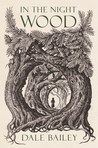
In the Night WoodIn the Night Wood by Dale Bailey

My rating: 5 of 5 stars

This book does everything I want a haunting story to do: echoes and parallels; allusions and mash-ups of ancient sinister figures; the blurring of lines between grief and madness; the uncovering of old family secrets; history recent and ancient repeating itself again and again; shadows and dread and a legacy of darkness.

This is one of the few stories meditating on stories I’ve enjoyed in quite a while, because it focuses on the stories and not the storyteller or the act of telling the story. This focus keeps the story from becoming another self-indulgent meditation on the act of writing, keeps it in the realm of horror as the character realizes he’s just another turn on an inexorable wheel. Such an effective use of the ouroboros motif.

I’ve been equally fascinated and unsettled by the horned king/erl-king/Cernunnos/Herne since I first read about them years ago. Bailey crafts a wonderfully sublime threat from what little we know of these mythic figures.

I didn’t want this book to end, I enjoyed reading it so much.

View all my reviews

Mapping the Interior – Stephen Graham Jones

Mapping the InteriorMapping the Interior by Stephen Graham Jones

My rating: 4 of 5 stars

So much packed into such a small, unsettling space. Jones walks the line so many attempt in stories like this, the ambiguity of is-it-real or is-it-all-in-their-mind. Junior’s child logic keeps us wondering through nail-biting confrontations with the thing that might be the ghost of his father, or might be his own mind’s efforts to impose meaning and logic on meaningless and illogical things. The gritty reality of the story is so grounding, you don’t even realize its true horror until the end, where you see what lies within Junior, that neither Junior nor Dino ever really grow up or truly leave that house, never escape the legacies that made them. The layering of meaning and metaphor in this novella is masterful.

View all my reviews