Novellas to ring in the New Year
I’ll be reading a novella a day for this last week of 2020 (shake that dust off my boots and forge ahead to better things). Seems like a good way to clear out some of the TBR and also read all the things!
I’ll be reading a novella a day for this last week of 2020 (shake that dust off my boots and forge ahead to better things). Seems like a good way to clear out some of the TBR and also read all the things!
The Physicians of Vilnoc by Lois McMaster Bujold
My rating: 4 of 5 stars
Another enjoyable Penric novella! I was uncertain when I started it if I wanted to be reading about a disease outbreak right now (and on Christmas!), but I trusted Bojuld to give me a positive ending, and she delivered. (She saves the real tragedies in Penric’s stories for off camera.) In the midst of solving the riddle of the illness, Penric grapples with a troubled piece of his past we are told about in an earlier volume but don’t see, and gains new perspective on why it was considered such a problem that Desdemona ended up in him and not her intended next host in the first place. By the end of the story, Pen sees the path of his future in truly developing others and not just himself unfolding before him.
Read on: December 25, 2020
View all my reviews
 Mapping the Interior by Stephen Graham Jones
My rating: 4 of 5 stars
So much packed into such a small, unsettling space. Jones walks the line so many attempt in stories like this, the ambiguity of is-it-real or is-it-all-in-their-mind. Junior’s child logic keeps us wondering through nail-biting confrontations with the thing that might be the ghost of his father, or might be his own mind’s efforts to impose meaning and logic on meaningless and illogical things. The gritty reality of the story is so grounding, you don’t even realize its true horror until the end, where you see what lies within Junior, that neither Junior nor Dino ever really grow up or truly leave that house, never escape the legacies that made them. The layering of meaning and metaphor in this novella is masterful.
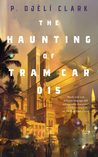 The Haunting of Tram Car 015 by P. Djèlí Clark
My rating: 4 of 5 stars
I enjoyed this SO MUCH.
Not only is it delightful to return to the world of “A Dead Djinn in Cairo,” Clark develops the world further while he tells another story. The conversations underpinning the world about modernity, social change, gender roles, and feminism, carry forward into The Haunting of Tram Car 015 and not only advance in the background but are intrinsic to the plot. The style and technology move from Victorian Steampunk into Art Deco. I could visualize the many geometric patterns and the Art Deco style of the women’s suffrage posers while reading this story, and although it doesn’t quite go full Decopunk, the flirtation in that direction makes my heart happy. Clark turns the second wave of Egyptian Revival from the Art Deco period an actual Egyptian movement instead of a Western fashion trend. The alternate history worldbuilding is so tight and clever, I can’t say enough good about it.
As I’ve come to expect from Clark, he delivers a kick-ass story driven by kick-ass characters. Every encounter is a character study, and every character leaps off the page. Hamed and Fatma gossiping about her case from “A Dead Djinn in Cairo” over tea and cake was the perfect ending note.
More, please.
 The Black God’s Drums by P. Djèlí Clark
My rating: 4 of 5 stars
I am loving the explosion of speculative fiction set in New Orleans. The Black God’s Drums isn’t just speculative fiction, it’s alternate history. And on top of that, it’s steampunk. Just take all my money now.
Like Sarah Gailey in American Hippo, P. Djeli Clark takes us down the Mississippi river to the Big Easy by way of a few changes to your history textbook. Successful slave rebellions, a few alterations to the American Civil War, a dash of steampunk, and you’ve got the free city of New Orleans, an airship port straddling the tenuous relationship between the North, the South, and various island nations of the Caribbean. Clarke deftly walks us through this within the 110 pages of the novella, scattering well-placed details when they become relevant to the story instead of info-dumping all the ways this New Orleans is not the city you know at the beginning of the story. He trusts the reader to pick up what he’s putting down, and I like being treated as a smart reader.
Creeper and Ann-Marie are the best sort of mirrored characters—each carries a god, but they deal with it in opposite ways. Both are forced to reckon with these strange inhabitations in the climax of the story, which Clark wastes no time getting to. Some novellas feel like incomplete novels, but this one is exactly the right length—for the story, anyway. I would happily spend a lot more time in this version of the world. (Can we please have more stories with the nuns? They completely steal the one scene they’re in, and from that one scene, we can extrapolate half a dozen elevator pitches for other stories set in this world.) The power team of Ann-Marie and Creeper can come, too.
 eabrenner